










Events have always required a lot of coordination.
Invitations, registrations, guest lists, communications, feedback surveys, reporting… the list goes on. For years, many organisations managed these moving parts using a combination of spreadsheets, email tools, and manual processes.
But as events become more strategically important, this approach is starting to break down. Today, the biggest challenge is no longer organising the event itself. It’s proving the value of the event afterwards.
Events are a strategic investment
According to Lyyti’s survey, more than half of organisations allocate between 10–20% or less of their marketing budget to events.
At first glance, that might sound modest. But when you consider that overall marketing budgets typically represent only a small share of company revenue, this allocation reveals something important: They should be treated as a significant strategic investment.
And like any investment, they need to demonstrate results.
The measurement gap
Digital marketing channels have set a new standard for performance measurement. Marketers can easily track clicks, conversions, campaign performance, and revenue attribution.
Events, however, have been harder to measure.
Many teams still rely on surface-level metrics such as:
- number of registrations
- attendance rates
- post-event satisfaction surveys
These indicators are useful, but what leadership always want to know is whether the event contributed to business results.
As events compete with digital channels for budget, the pressure to answer this question is growing.
Connecting events to business impact
This is where event technology becomes critical.
Modern event platforms don’t just handle registrations and logistics. They create a structured data flow around the entire event lifecycle.
This allows organisations to understand:
- who attended the event
- how participants engaged
- which customers or prospects were present
- what happened after the event
- how events influenced pipeline and revenue
In other words, events can finally be analysed with the same level of clarity as other marketing activities.
When this data is connected to CRM systems and marketing automation tools, the picture becomes even clearer. Events move from being isolated activities to becoming fully integrated parts of the customer journey.
Freeing organisers to focus on what matters
Another benefit of event technology is less visible, but equally important.
When routine tasks are automated — registrations, confirmations, reminders, reporting — event teams spend less time managing logistics and more time focusing on the experience itself.
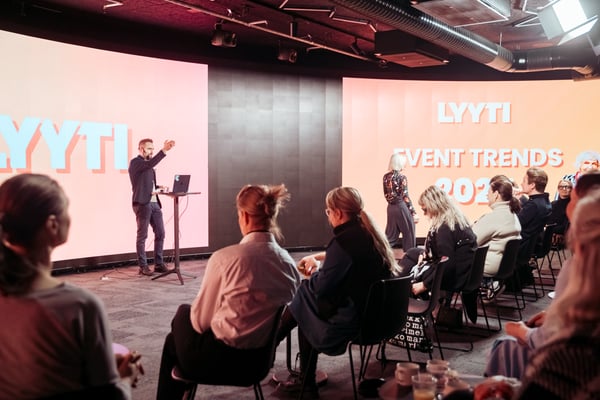
This matters because the real value of events lies in what happens between people. New relationships are formed, deep conversations are being had, and experiences are shared (facial expressions included 🤩). With all this, trust and community are built.
In the b2b environment, this is really important, and technology creates the structure that enables them to happen more effectively and fosters connection.
As Lyyti’s CEO, Petri Hollmén, puts it, the right event technology allows organisers to focus on what truly matters: engaging the audience and delivering meaningful value.
The organisations that will win with events
Looking ahead, the organisations that succeed with events will not necessarily be those with the largest budgets or the biggest venues.
They will be the ones who treat events as a measurable part of their growth strategy.
This means building a foundation where:
- event data is connected to business outcomes
- participation and engagement can be analysed
- marketing and sales teams share insights
- every event helps improve the next one
In this environment, event technology is no longer just a convenience; it becomes the backbone of the entire event strategy.
Because when events can clearly demonstrate their impact, they are no longer just experiences. They become one of the most powerful tools an organisation has for building relationships, generating opportunities, and driving long-term growth.
Read more about 2026 event trends in our report. Download your copy below.

How small event organisers can draw inspiration from event giants

Event Planning Tips: 12 Proven Strategies for Smooth Events (2026)
Small Events, Big Impact: Why Smaller Events Are Winning in 2026

The Ultimate Guide to Event Management Systems