








When planning events, timing often feels like a practical detail. Pick a date. Send the invitations. Secure a calendar slot. But in today’s event landscape, timing has become something much bigger than logistics. It has become a strategic advantage or a hidden risk.
The reality is simple: people’s calendars are fuller than ever. Meetings, webinars, industry events, internal workshops, training sessions, networking events — the list keeps growing. Securing a spot in someone’s calendar no longer guarantees their attention, let alone their participation.
As Joonas Valkonen from Timma puts it, participation has become more difficult precisely because time has become so contested. When professionals decide whether to attend an event, timing and relevance often determine the answer.
The mid-week comfort zone
Looking at event data, organisers tend to follow familiar patterns. Mid-week events remain the dominant choice, with many events scheduled during the traditional working day.
On the surface, this makes sense. Tuesdays, Wednesdays, and Thursdays feel safe. People are back in work mode after Monday, but not yet winding down for the weekend.
But there’s a downside to this logic: when everyone chooses the same timing, events begin competing with each other for the exact same attention window.
This creates what could be called the event traffic jam. Too many invitations land in inboxes at the same time, forcing people to prioritise quickly. Even well-designed events risk being ignored simply because the calendar is already full.
The quiet rise of after-work events
Interestingly, the data reveals a shift in behaviour.
Events starting later in the day are clearly gaining popularity. Compared to previous years:
- events starting at 5 p.m. have increased by 11%
- 6 p.m. events have grown by 27%
- and 7 p.m. events have increased by 34%
This change suggests organisers are experimenting with ways to escape the crowded daytime calendar and meet participants when their attention is less fragmented.
Evening events also create a different atmosphere. People arrive with fewer competing obligations, conversations tend to flow more naturally, and networking becomes easier when participants aren’t rushing back to their next meeting.
In many cases, shifting the schedule by just a few hours can transform the entire experience.
Seasonality still matters
Timing also plays out on a much larger scale throughout the year.
Event activity follows a surprisingly consistent rhythm. Most months maintain steady levels of activity, but two stand out clearly: July and August.
July sees a dramatic drop in event participation, largely because in-person events slow down significantly during the summer holiday season. By contrast, August marks a strong return to activity, with event volumes rising sharply as professionals return to work.
These seasonal patterns reveal something important. Attendance doesn’t depend only on how good an event is — it also depends on how ready the audience is to engage at that moment.
An excellent event scheduled at the wrong time may still struggle to attract attention.
Timing as a competitive edge
What all of these points point to is a broader shift in how events compete.
In the past, organisers focused heavily on content, speakers, and venue quality. Those elements still matter, of course. But now they exist within a much more crowded environment.
That means success increasingly depends on understanding the attention landscape around your audience.
Instead of asking, “When can we organise this event?”, the more powerful question becomes: “When are people most likely to show up and engage?”
Sometimes the answer might be earlier in the day. Sometimes it might be after work. Sometimes it might mean avoiding peak months entirely.
The key is moving away from default scheduling habits and thinking more strategically about timing.
The future of event scheduling
As event calendars continue to grow, attention will become even scarcer.
In this environment, the organisations that succeed will not necessarily be those that organise the most events. They will be the ones who choose their moments carefully.
Because in the end, an event doesn’t compete only with other events.
It competes with everything else demanding people’s time.
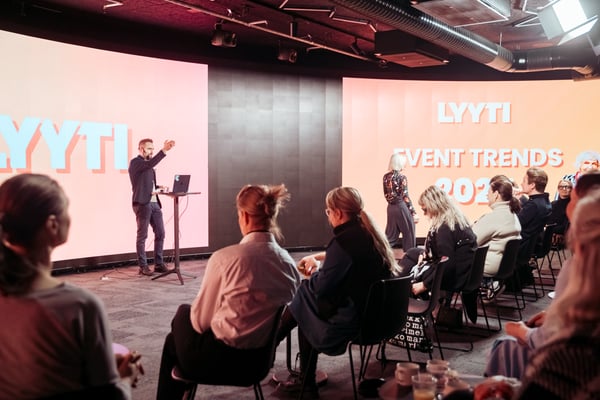
Read more about 2026 event trends in our report. Download your copy below.
.jpg?width=600&name=lyyti-future_of_events_2025-epicenter-photos-brave_teddy-web-13%20(1).jpg)